#TDS26 Spotlight: Reimagining Jamaica’s National Stadium and Independence Park

A new National Stadium, a transformed sporting campus and a civic destination designed around Jamaica’s extraordinary sporting identity. Ryder Architecture’s Jonathan Seebacher and James Lowdon take us inside the ambitious redevelopment of Independence Park in Kingston.
Few countries have a sporting identity as instantly recognisable as Jamaica’s.
From generations of world-class track and field athletes to football, music and major cultural events, sport and entertainment occupy a unique place in the country’s national identity.
Now, that legacy is helping shape one of Jamaica’s most significant sports infrastructure projects: the redevelopment of the National Stadium and the wider Independence Park precinct in Kingston.

Ryder Architecture and CAA ICON are working in partnership with the Jamaican Government on the redevelopment of Independence Park, with the National Stadium at the heart of the wider masterplan.
The proposed National Stadium will accommodate 37,500 spectators, while the wider vision looks beyond the stadium bowl to create a connected destination for elite sport, community participation, entertainment and public life.
Ahead of TheStadiumBusiness Design & Development Summit 2026 in Manchester from 30 November–2 December, we caught up with Ryder Architecture’s Jonathan Seebacher and James Lowdon to explore the ambition, design thinking and next steps behind the project.
Reimagining a national sporting landmark

THE RYDER TEAM:
What is the overall vision for the redevelopment of Jamaica’s National Stadium and Independence Park?
The vision is to establish Independence Park as a premier national stadium for Jamaica and an international destination for sport and entertainment. The ambition extends well beyond the stadium. Through an integrated, sports-led masterplan, we want to create a vibrant civic destination that celebrates Jamaica’s sporting achievements, acts as a community anchor and delivers lasting social, economic and environmental benefits. It is an opportunity to create a facility that reflects national pride and international ambition.
What are the key design principles guiding Ryder’s approach to the project?
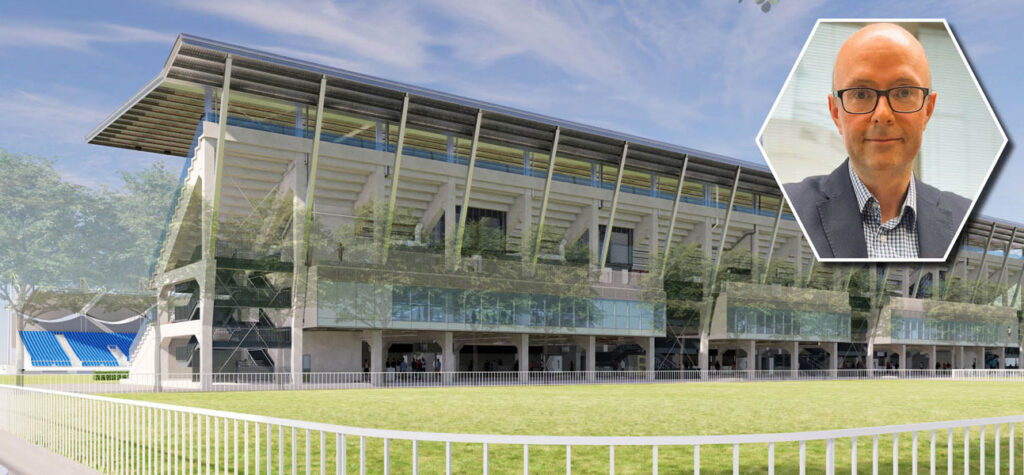
Our approach is rooted in Jamaican identity, combining an authentic architectural expression with the performance requirements of a modern international sporting venue. The design narrative is raw, defiant and vibrant, qualities that reflect the character, confidence and energy of Jamaica. Key principles include delivering an outstanding experience for athletes and spectators, creating an inclusive and accessible venue, and designing a stadium that meets international standards for football and athletics. Retaining and redeveloping the historic west stand provides a tangible connection to the venue’s heritage, while the wider landscape improves connectivity through enhanced public spaces. The aim is for the venue to feel unmistakably Jamaican, while meeting the expectations of a global audience.
What are some of the biggest challenges involved in redeveloping an established national sporting venue?
The challenge is to transform a nationally significant venue while respecting its history, responding to the constraints of the existing site and delivering the technical standards expected of a world-class stadium. The existing stadium configuration cannot fully meet the project’s long-term ambitions, so the proposals involve substantial redevelopment alongside the retention and integration of the west stand. This requires careful coordination of new and existing structures, underground services, circulation, security and event operations. The venue must accommodate football, athletics, concerts and community use, while responding to Jamaica’s tropical climate, material availability and construction requirements, alongside affordability and operational efficiency.

How will the redevelopment improve the experience for athletes, spectators and the wider community?
The redevelopment will provide a significant step change in facilities and experience. The proposed National Stadium will accommodate 37,500 spectators, with covered seating, improved sightlines, modern athlete and player facilities, enhanced media provision and a more varied hospitality offering.
The wider masterplan is equally important.
A new 4,000-seat stadium, a multi-use sports hall, dedicated throws facilities and improved pedestrian connections will support training, competition and grassroots participation. New plazas, fan zones, walkways and landscaped public spaces will make Independence Park more welcoming and versatile.
What role will sustainability and long-term operational performance play in the development?
Sustainability is an integral part of the design. The landscape strategy responds directly to Kingston’s climate through tree canopy, native and locally familiar planting, shaded pedestrian routes, permeable surfaces, rain gardens and sustainable drainage.
At building level, we are prioritising robust, durable materials, efficient building services and systems that are straightforward to operate and maintain. The design also considers resilience to hurricanes and other extreme weather events. Retaining and redeveloping the existing west stand is another important part of the approach. Ultimately, the objective is to create a facility that is not only world-class at opening, but also resilient, adaptable and economically sustainable over its operational life. Flexible spaces and a broader programme of events and activities will help support year-round use and diversify revenue beyond major sporting fixtures.
What are the next major milestones for the project, and what are you most excited about as it progresses?
The completion of Stage 2 represents a major milestone, establishing the concept design, masterplan, cost plan and programme needed to inform the next phase of decision-making.
The next priorities are to secure the necessary government approvals and funding, progress planning and develop the design in greater technical detail. The Stage 2 baseline programme anticipated enabling works and demolition in early 2027, main construction from the third quarter of 2027 and completion in early 2030, subject to approvals, procurement and the final programme.
What excites us most is the opportunity to see the vision translate into a place that Jamaicans can take pride in for generations. This is not simply a stadium project; it is an opportunity to create a lasting legacy for Jamaican sport, strengthen Independence Park as a civic destination and establish a venue capable of inspiring future generations of athletes and fans.
Meet the Ryder team

STADIUMS. ARENAS. DESTINATIONS.
Meet the projects shaping the future of sport
Join the stadium design and development community in Manchester for project insights, practical expertise and the conversations that move venues forward.
TheStadiumBusiness Design & Development Summit 2026
30 November – 2 December 2026
Emirates Old Trafford, Manchester



Share this